

Video Tutorial
 Watch BrowserAct and Make Automation Tutorial on YouTube.
Naming note: BrowserAct calls the automation a Bot. The current Make app may still displayWorkfloworRun a Workflow; these labels refer to the corresponding BrowserAct Bot.
Available Actions
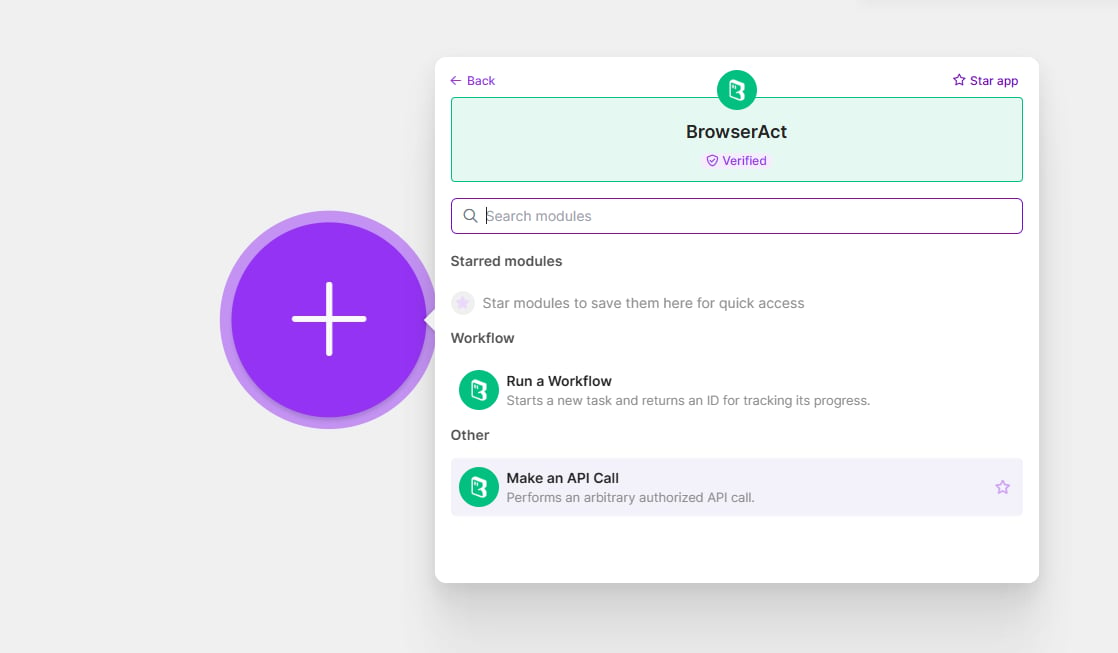
This guide uses the following Make actions:Run a Workflow: runs a Workflow Built Bot and returns a Task ID for tracking.Make an API Call: performs an authorized BrowserAct API request.
Before You Start
Prepare the following:- A BrowserAct Bot that runs successfully
- The Bot’s required input values
- A BrowserAct API key
- A Make account
Integrations > Manage API Keys > Create New API Key. Enter a name, choose the confirmation mode, select Confirm, and copy the key from the API Keys list.
Connect BrowserAct to Make
- In Make, create a scenario or open an existing one.
- Add the trigger that should start the scenario.
- Add a module and search for
BrowserAct. - Select the BrowserAct app.
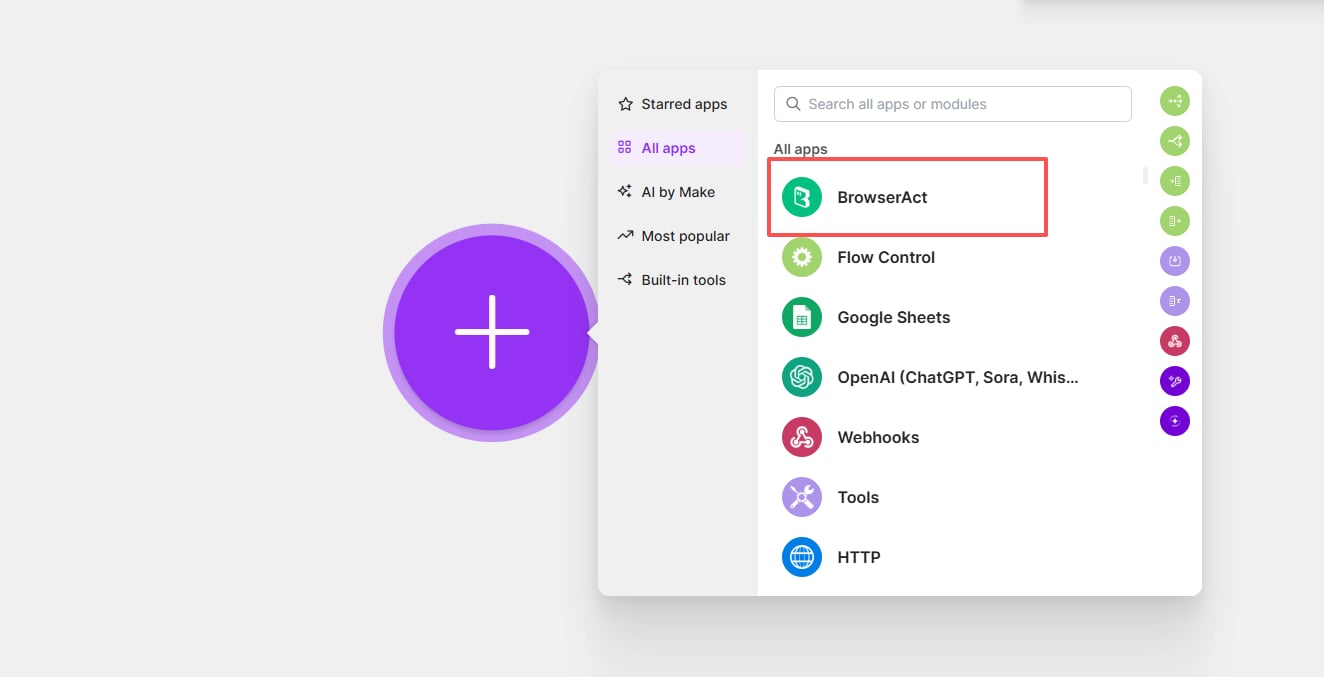
- Choose
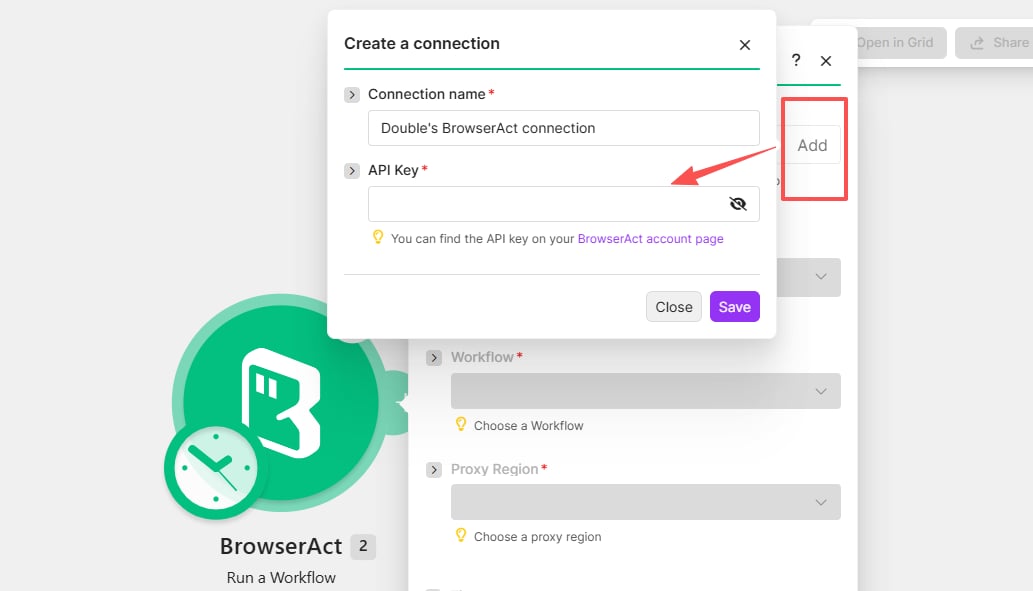
Run a Workflow. - Under Connection, select
Add. - Enter a connection name and paste the BrowserAct API key.
- Select
Save.
Select a Bot
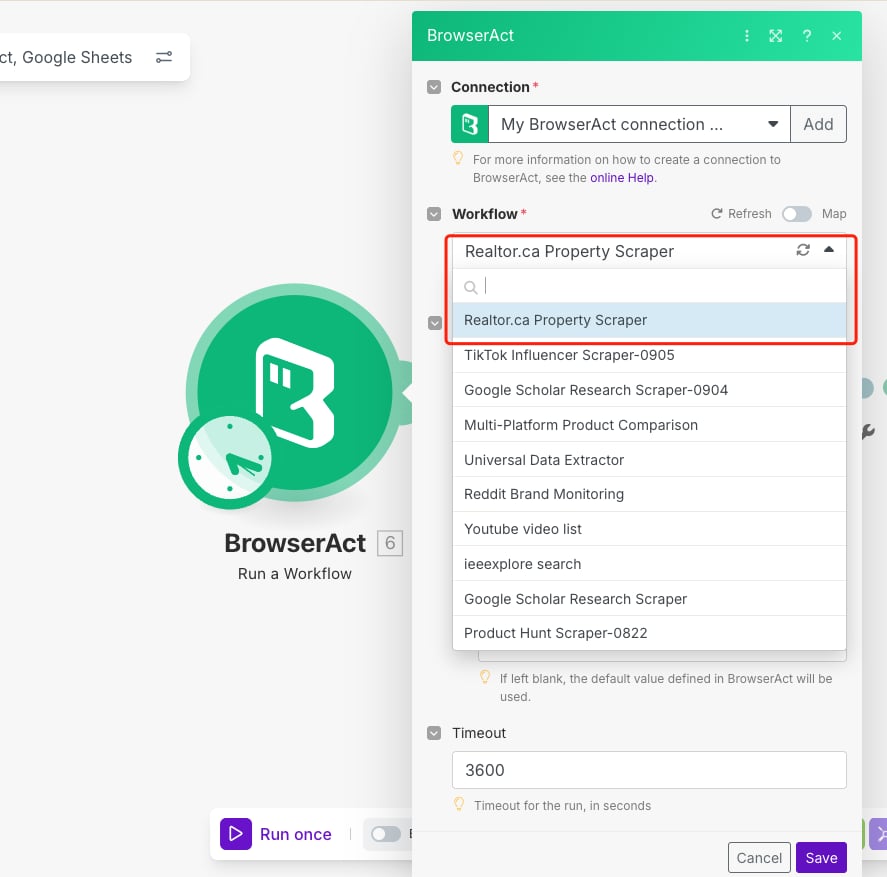
- Under
Search Workflows From, chooseMy Workflows (With Published Version Only)for your own Workflow Built Bots, orTemplate Marketplacefor available templates.
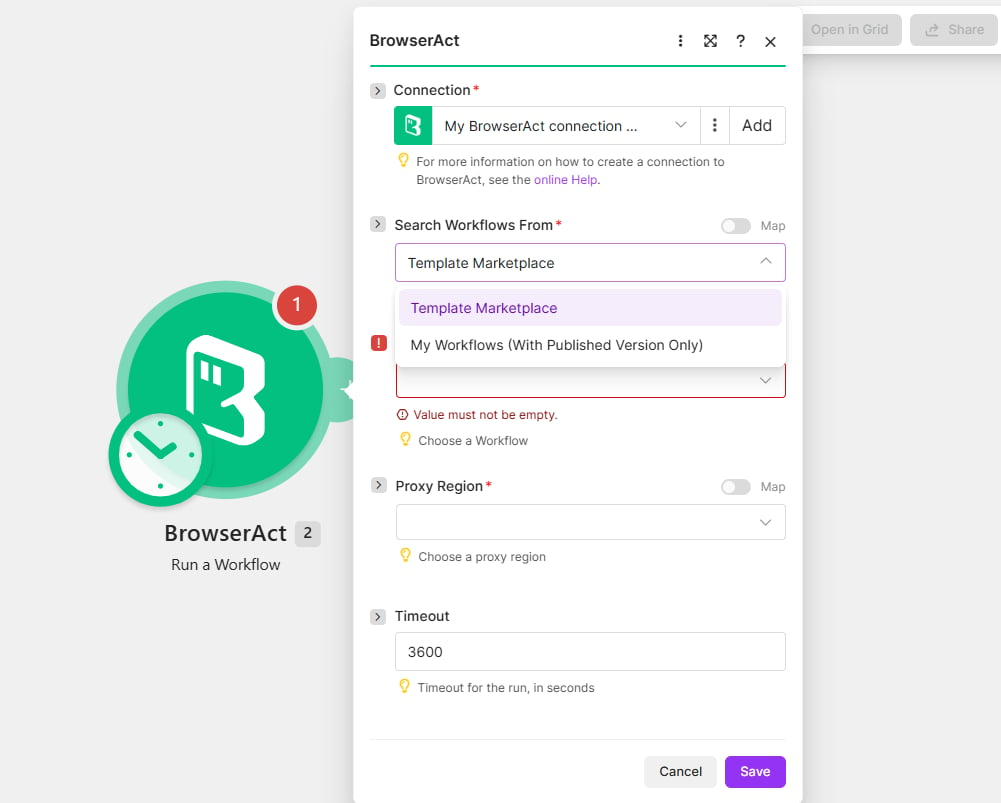
- Open the
Workflowfield. - Choose the Workflow that corresponds to your BrowserAct Bot.
- If Make does not list the Bot, refresh the field or reconnect the BrowserAct account.
Workflow field.
Map Bot Inputs
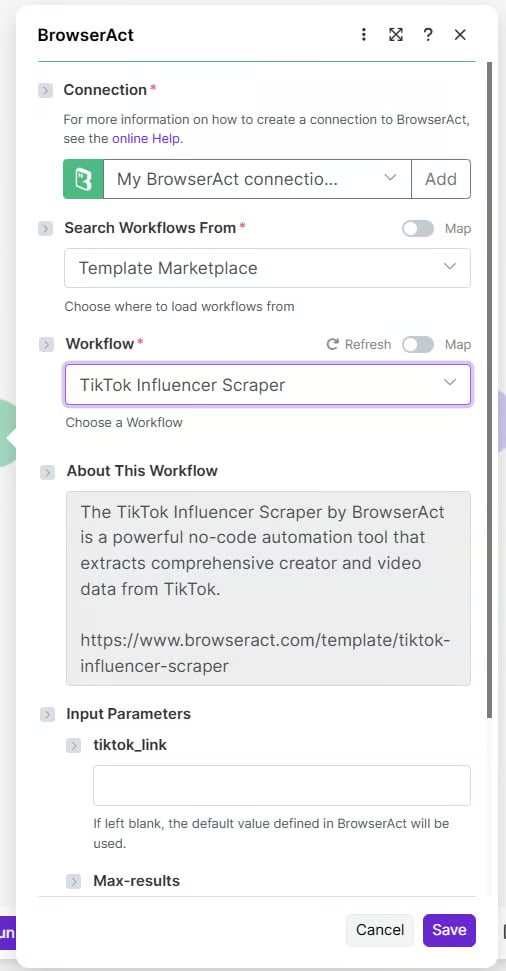
After a Bot is selected, Make displays the input parameters required by that Bot. For each parameter, either:- Enter a fixed value.
- Map a value from an earlier Make module.
keyword can receive a fixed search term or a value submitted by a form, Webhook, spreadsheet row, or CRM record.
Test the Scenario
- Select
Run oncein Make. - Trigger the scenario with test data.
- Confirm that BrowserAct creates a Task.
- Review the BrowserAct module output in Make.
- If the Task fails, open the related Task in BrowserAct and review its status and result.
Use Bot Results
Add another Make module after BrowserAct and map the returned fields to the destination. Common destinations include:- Google Sheets
- Slack or email
- Airtable or Notion
- A database
- A CRM
- An AI processing step
Schedule Runs
Use Make’s scheduling settings when the Bot should run automatically.- Configure and test the complete scenario.
- Open the scenario scheduling settings.
- Choose the required interval or schedule.
- Save and activate the scenario.
Common Scenarios
Scheduled Data Collection
Run a BrowserAct Bot on a Make schedule and send the structured result to Google Sheets, a database, or email.Lead Enrichment
Use a form, CRM event, or Webhook to provide a company name or website. Run the BrowserAct Bot and write the enriched result back to the CRM.Price Monitoring and Alerts
Run a product-monitoring Bot at a regular interval, compare the returned value, and notify the team when a condition is met.Troubleshooting
For current BrowserAct actions available in Make, see the BrowserAct integration on Make.